
Service Before Self
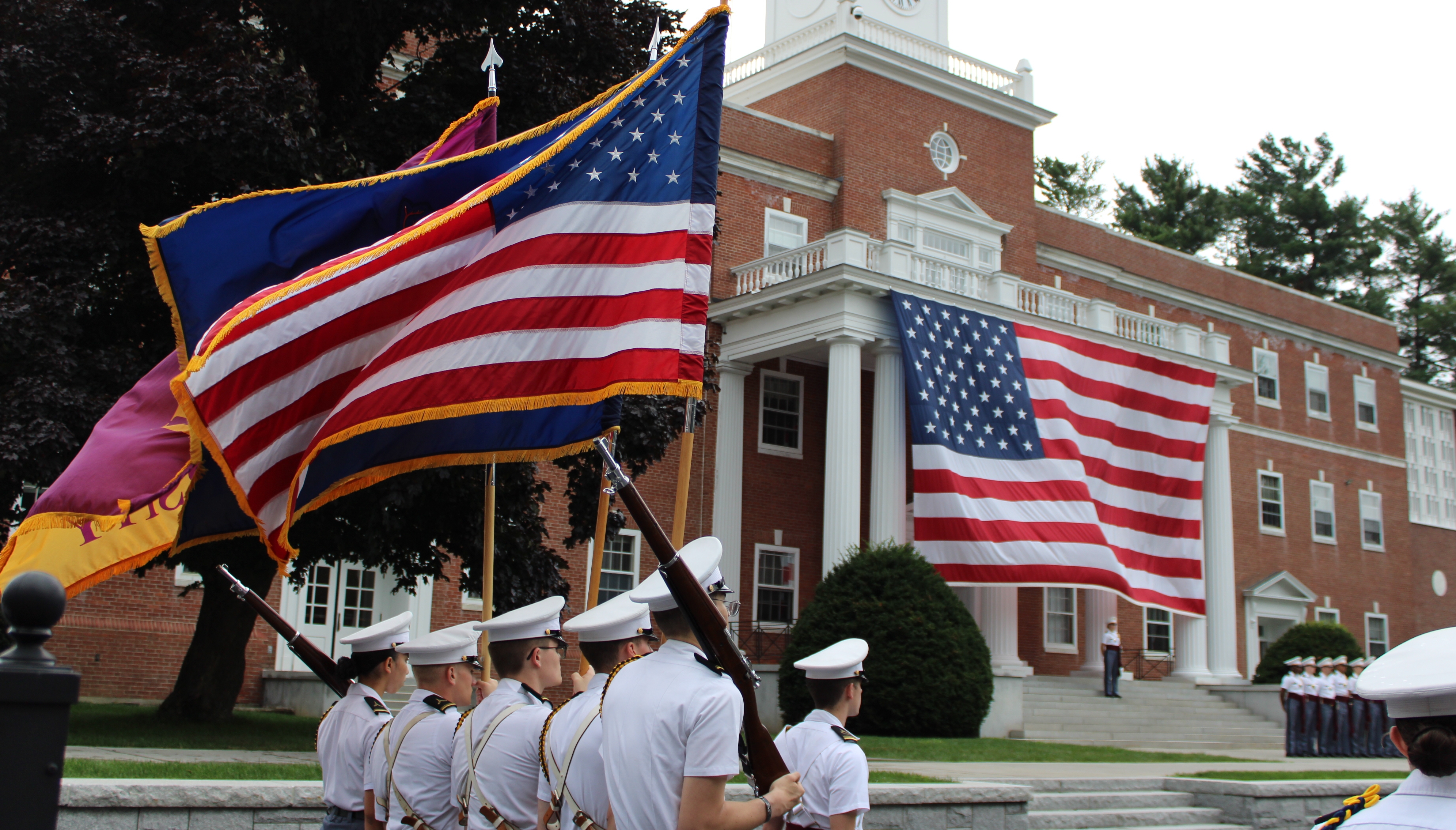
Norwich University’s 200-plus-year legacy of preparing citizen-soldiers for leadership, service, and civic responsibility in America.
Norwich University’s Story of Service
Since its founding in 1819, Norwich University has been closely tied to the American story. Established by Captain Alden Partridge, it was created to educate citizen-soldiers prepared to lead in military and civic life. His vision held that a free republic depends on citizens prepared to think critically, act decisively, and accept responsibility for the common good.
That purpose is evident more than two centuries later. Norwich’s mission continues to define its role in American higher education:
“To give our youth an education that shall be American in its character — to enable them to act as well as to think — to execute as well as conceive — to ‘tolerate all opinions when reason is left free to combat them’ — to make moral, patriotic, efficient, and useful citizens, and to qualify them for all those high responsibilities resting upon a citizen of this free republic.”
Built by the Norwich Values
These words are the foundation of the Norwich experience, defining an institution that views education as preparation for service, citizenship, and leadership in a changing nation.
Captain Partridge envisioned a “citizen-soldier” who was able to lead in civilian life and serve in the military when called upon. Grenville Dodge, Class of 1851, is a notable example of these ideals in action during two of America’s most historic moments. As one of the lead engineers for the Transcontinental Railroad, he helped connect America’s east and west coast. He also served with distinction as a Union Army general and became one of GEN Ulysses S. Grant’s most trusted officers.
From its earliest years, Norwich challenged traditional higher education. Partridge believed learning should extend beyond the classroom into lived experience. Students developed intellectual rigor alongside physical training and moral discipline. Leadership was practiced, not theoretical. This philosophy helped establish Norwich as a pioneer in American higher education and influenced norms later adopted nationwide.
The University’s revolutionary approach to education emphasizes the development of the whole student through intellectual growth, physical readiness, and servant-leadership. Norwich is recognized as the birthplace of the Reserve Officers’ Training Corps (ROTC) and the first college in the nation to offer civil engineering as a distinct course of study. It was also among the first to integrate physical education and organized military training and leadership development into campus life. Each milestone reflected a conviction that education must prepare individuals for a life of service and consequence.
That conviction continues today. Norwich students pursue diverse paths through the Corps of Cadets and civilian programs, united by a belief that achievement is measured by service as much as success.
Across generations, alumni have answered that call through military service, public safety, engineering, education, healthcare, cybersecurity, and national security, shaping communities and institutions across the country. Their impact reflects a continuing commitment to strengthen the nation through professional excellence and civic responsibility.
The Norwich Legacy Continues
Today, that commitment to the Norwich way of life continues in academic programs aligned with national needs. In cybersecurity, graduates defend critical digital infrastructure and safeguard information systems in an increasingly connected world. In nursing, they serve in a strained healthcare system with skill and compassion. In criminal justice and criminology, they uphold integrity, accountability, and public trust. In engineering, they design and maintain essential systems supporting daily life and national progress.
While disciplines evolve, the mission remains constant. Norwich forms individuals who understand that freedom requires responsibility and leadership is defined by service. The University continues to cultivate leaders who can think critically, act ethically, and respond effectively in moments of uncertainty.
For more than two centuries, Norwich University has prepared citizens to meet change with resolve. As new challenges emerge, graduates continue to embody the commitment to lead, serve, and strengthen the nation.