
Renewable Materials are Driving the New Bioeconomy

As conversations around sustainability and industry evolve, so does the role of business. UPM, a global material solutions leader, is prepared to play a central role in the emerging bioeconomy with its new state-of-the-art biorefinery, which is the first site of its kind to produce unique renewable materials and bio-based chemicals from wood at an industrial scale.
The bioeconomy boom
Bio-based materials are essential components of strategies aimed at achieving climate neutrality or reducing dependence on fossil-based chemicals. Renewable materials are important because they complement recycling – true circularity and sustainability will remain out of reach unless product lifecycles address both. And designing products to accommodate both is an opportunity for innovation and competition. The biochemical and bio-based chemicals market stood at 72.6 billion USD in 2023. It’s projected to grow to almost 198 billion USD by 2033. As UPM expands its advanced materials and decarbonization portfolios, the bio-based chemical market represents a significant growth opportunity for the company
The future of bio-based chemicals is already here
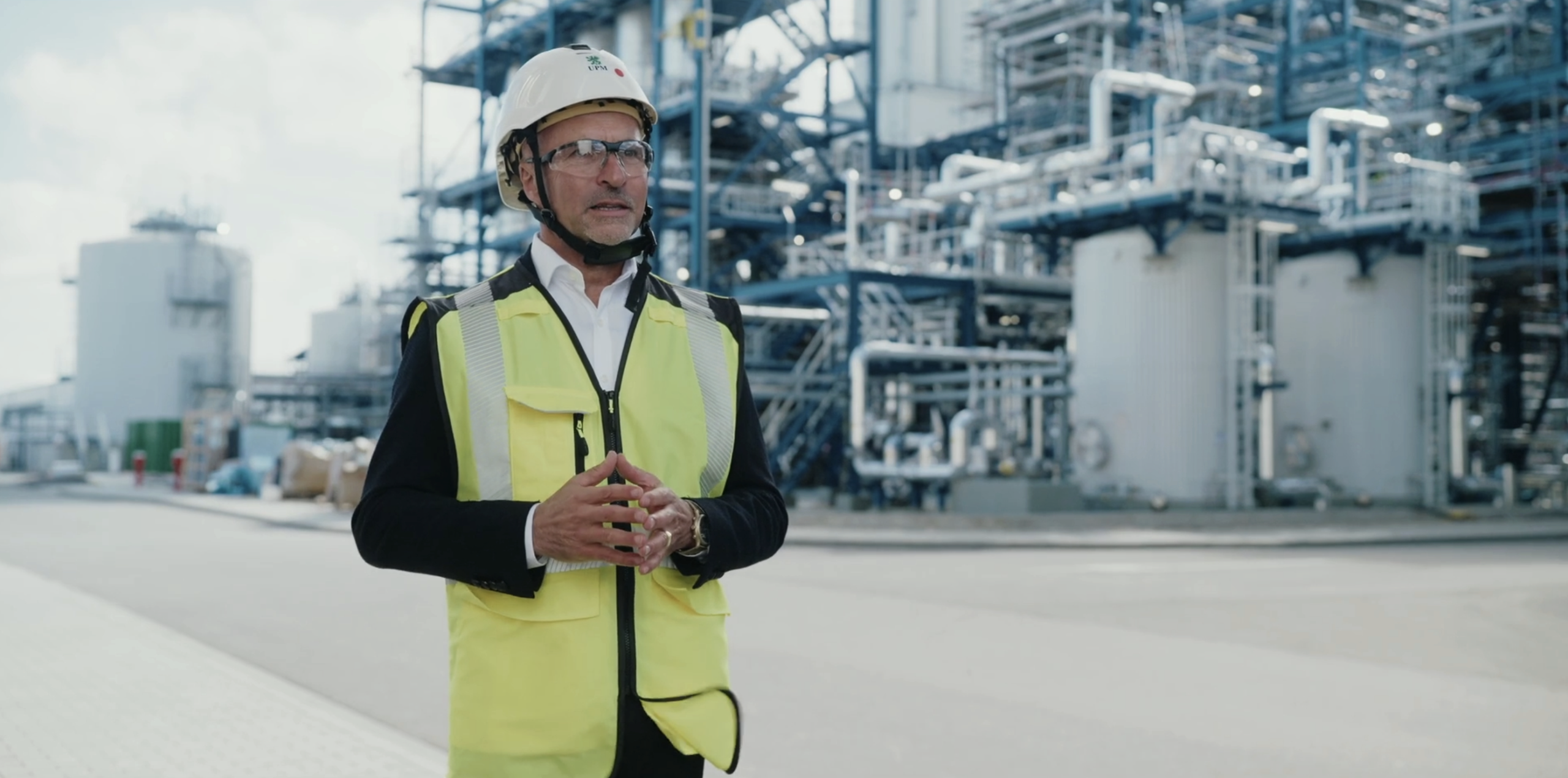
As an existing material solutions leader, UPM is poised to become a major player in the emerging bioeconomy. UPM’s new Leuna biorefinery in Germany represents one of the largest investments in the European bioeconomy, with a total CAPEX estimate of EUR 1.275 billion. It’s projected to produce about 220,000 tonnes annually of advanced bio-based chemicals derived from sustainably sourced hardwood. The biorefinery has achieved ISCC Plus, PEFC and FSC™ chain of custody certifications, highlighting UPM’s commitment to sustainable sourcing, full traceability, and transparent operations.
“Leuna is a true groundbreaking investment and a front runner project. What we do here is we use first-of-its-kind technologies to convert woody biomass into renewable chemicals and materials,” said Harald Dialer, UPM Executive Vice President of Technology and UPM Biorefining, in a new Global Sustainable Trade Initiative documentary. “In a way we’re dissecting wood on a molecular level and rearranging the molecules to value products that are replacing fossil equivalents in various chemical value chains.”
Examples of its renewable materials include UPM’s BioMEG and BioMPG, which can be used in PET bottles, textiles, and cosmetics, as well as lignin-based Renewable Functional Filler (RFF) – a sustainable replacement for highly CO2-intensive carbon black and silica in rubber and plastic applications.
The promise of bio-based, renewable materials
The Leuna biorefinery isn’t just an important investment for UPM – it’s significant for the global bioeconomy, Europe, and the development of renewable materials. The bio-based chemicals produced at the Leuna biorefinery are opportunities to replace fossil-based substances in a wide range of applications, which can make the everyday items people use and love more sustainable and potentially higher-performing. Leuna is transforming the chemicals industry with unique, wood-based biochemicals, and for UPM this is another step in the company’s transformation.
Find out more about GSTI Campaign