
Innovative Education in Charleston
Discover how the College of Charleston delivers innovative hospitality education in one of the world’s top travel destinations.
Innovative Education in a Distinct, Inspiring Location
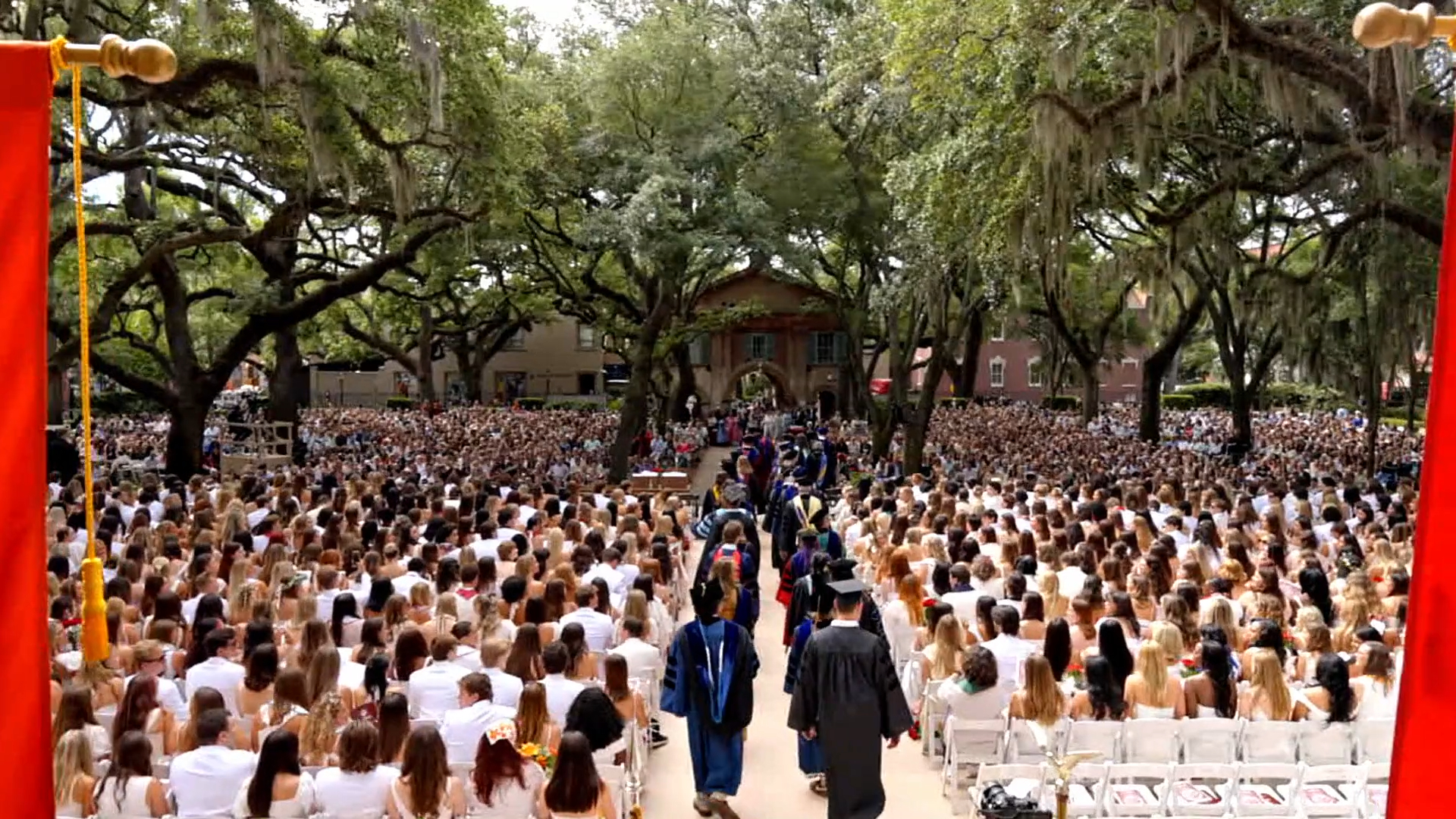
As the United States approaches the 250th anniversary of its founding, the College of Charleston reflects a history that predates the nation itself.
That innovative spirit is especially visible in the College of Charleston’s Michael and Amy Bennett School of Hospitality and Tourism Management, where students study and work in one of the world’s most celebrated travel destinations. Consistently ranked among the top cities in the U.S. and internationally , Charleston has become a global hospitality brand known for its luxury hotels, renowned restaurants, cultural attractions and visitor experiences.
For students, the city itself serves as a living laboratory.
The College’s accredited School of Engineering, Computing, and Mathematics also continues to see strong employer demand, including internships for students and full-time placement of graduates.
“I would say the best word to describe the College of Charleston is innovative. The College of Charleston has repeatedly reinvented itself over its 250-year history, and it’s yet again reinventing itself to become one of the best higher education institutions in the country, serving our local economy and serving the state of South Carolina,” President Andrew T. Hsu said.
Innovative Education Focused on Student Outcomes
The Bennett School, housed within the College of Charleston’s AACSB-accredited School of Business, prepares students for leadership careers in hospitality and tourism through a curriculum grounded in business strategy, experiential learning and industry engagement. Students gain expertise in areas such as hotel operations, revenue management, event planning, tourism marketing and customer experience management while developing the communication and critical-thinking skills demanded by today’s employers.
Charleston’s thriving hospitality economy creates opportunities that few universities can replicate. The tourism industry generates billions in annual economic impact for the region and supports tens of thousands of jobs across hotels, restaurants, transportation, events and entertainment.
The College’s location in the center of downtown Charleston places students within walking distance of award-winning hotels, nationally recognized restaurants and major tourism organizations. In this environment, innovative learning happens both inside and outside the classroom.
Industry leaders have recognized the strength of the College’s approach. Hilton Worldwide President and CEO Chris Nassetta, whose daughters attended the College of Charleston, said the university’s connection to Charleston’s hospitality economy creates meaningful advantages for students entering the industry.
“We have been recruiting more and more out of College of Charleston because I think they do a really, really nice job of blending a real-world experience with a great academic experience. So we’re very excited about the partnership that we have,” Nassetta said.
Charleston’s School of Engineering, Computing, and Mathematics boasts a Bachelor of Science degree program in Systems Engineering accredited by the Engineering Accreditation Commission of ABET, under the commission’s General Criteria and Program Criteria for Systems and Similarly Named Engineering Programs. ABET is the gold standard of accreditation in engineering education.
Engineering students benefit from expanding strategic collaborations on campus and with industry partners. “Given Charleston’s comprehensive offerings, such collaborations can provide deep learning opportunities through unique interactions,” said School of Engineering, Computing, and Mathematics Dean Steven Schreiner.
These relationships reflect the College’s broader commitment to aligning academic programs with workforce needs and emerging industry trends. Experiential learning remains central to the student experience, with students participating in internships, leadership initiatives, event management projects and global learning opportunities designed to prepare graduates for long-term success in a competitive international marketplace.
Innovative Leadership for the Future of Hospitality and Tourism
The College of Charleston’s emphasis on innovation extends beyond traditional education. University leaders are focused on preparing graduates for long-term career success through experiential learning, leadership development and exposure to emerging technologies shaping the future of industries including engineering, business and tourism.
As hospitality organizations increasingly rely on data analytics, artificial intelligence and personalized customer experiences, the College continues to evolve its curriculum to reflect the realities of a modern global industry. Students graduate prepared not only to enter the workforce, but to help lead it.
“The College of Charleston is a modern public university that honors its historic strengths, while advancing bold career-focused programs and preparing students for the demands of a rapidly changing world,” Hsu said.
For more than 250 years, the College of Charleston has adapted to meet the needs of each new generation. Today, in one of the world’s most dynamic economies, the university continues that tradition by delivering a robust, innovative education grounded in real-world experience, directly connecting students to industry, career development and the opportunity to become future global leaders.