
Smart Building Sustainability Powering Saudi Arabia’s Future
From Energy Consumers to Climate Enablers
Not long ago, buildings were seen as inevitable energy consumers, essential for development yet responsible for a significant share of global emissions. According to the UN Environment Programme (UNEP)–GlobalABC Global Status Report for Buildings and Construction 2024–2025, the sector contributed 34% of global CO₂ emissions. Today, Saudi Arabia is rewriting that narrative by transforming buildings into intelligent, responsive systems that actively support climate goals.
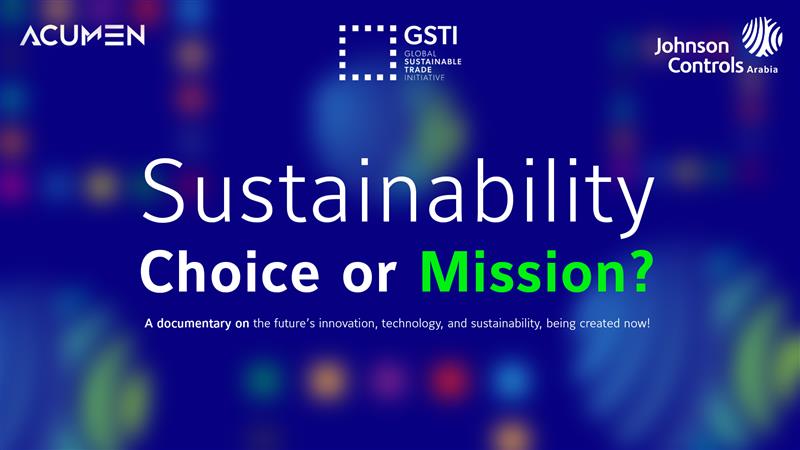
This narrative forms a central theme of the Global Sustainable Trade Initiative documentary featuring Johnson Controls Arabia. Through insights from Dr. Mohanad AlShaikh (CEO), Osama Haiba (Director of Aftermarket, IR & Energy Solutions), and Lena Alkhereiji (Head of Marketing & Corporate Communications), the film illustrates how smart-building sustainability in Saudi Arabia is shifting from ambition to tangible execution under Vision 2030.
Innovation at the Heart of Saudi-Made Solutions
Vision 2030 has positioned sustainability as a national priority, accelerating the adoption of smart solutions and localized manufacturing. JCA supports this transformation by delivering fully integrated smart building ecosystems, combining HVAC, building management systems, controls, fire, and security under one roof.
As one of Saudi Arabia’s first licensed Energy Service Companies, JCA enables measurable impact. Since 2020, its projects have generated over SAR 500 million in energy savings while avoiding more than 300,000 metric tons of CO₂ emissions, equivalent to 300,900 acres of forests. Based on aggregated data from energy efficiency projects awarded to our ESCO at Johnson Controls Arabia, these initiatives have delivered guaranteed savings over a 10-year period, significantly reducing carbon emissions and oil consumption. These outcomes demonstrate how smart building sustainability in Saudi Arabia delivers both environmental and economic value.
At the YORK Manufacturing Complex in King Abdullah Economic City, this vision becomes tangible. With 80% of the product portfolio localized and the capability to export globally, such as 100 chillers shipped to the U.S. in 2024, the facility exemplifies Saudi Arabia’s growing industrial confidence. Alkhereiji explains: “Each shipment is proof that Saudi innovation is world-class, competitive, and trusted, a reflection of Vision 2030 in action.”
Advanced capabilities such as the Kingdom’s first AHRI-certified performance testing lab for up to 600 tons air-cooled chillers and the region’s first Johnson Controls Net-Zero Center reinforce global standards while supporting local climate needs. Take a deeper look at our manufacturing capabilities jcarabia.com/manufacturing
Ensuring Performance, Year After Year
Sustainability does not end at installation. Long-term performance defines real impact. JCA’s Aftermarket Services Division, supported by a workforce of 1,897 employees across all roles, ensures buildings operate efficiently throughout their lifecycle.”
Drawing on data from installed base projects over the past 20 years, JCA monitors more than 1.3 million data points to enable predictive maintenance and optimize energy performance. Haiba notes: “By implementing predictive maintenance, we enhance equipment performance and reduce carbon emissions, ensuring efficiency sustainably continues year after year.” Learn more at jcarabia.com/aftermarket
Projects such as the Madina Retrofit at the Prophet’s Mosque demonstrate how heritage, comfort, and environmental responsibility can coexist, setting benchmarks for smart building sustainability in Saudi Arabia.
Shaping a Net-Zero Future for the Kingdom
As Saudi Arabia advances toward its 2060 net-zero target, smart buildings will play a decisive role in national decarbonization efforts. Through AI-enabled systems, net-zero manufacturing, and continuous performance optimization, Johnson Controls Arabia is helping reposition buildings as climate enablers rather than energy liabilities. Reflecting this strategic shift, AlShaikh states: “Sustainability is no longer an option, it is a responsibility. Our role is to ensure that buildings across the Kingdom actively contribute to national climate goals while delivering long-term operational value.”
This long-term commitment is anchored in a clear and focused vision. As Alkhereiji explains: “The goal is simple; to create smarter environments, to support sustainable growth and protect the planet for generations to come.”
Together, these efforts reinforce a future where smart building sustainability in Saudi Arabia drives resilience, economic competitiveness, and global leadership, built locally, trusted globally, and sustained for generations to come.
Find out more about GSTI Campaign